Micro-Apps: The Foundation of Customizable Business Suites in 2026
Blog
·
17/04/2026
·
In 2026, enterprise platforms are no longer judged by feature density. They are evaluated on architectural resilience, upgrade safety, and long-term adaptability.
For CTOs and CIOs, the real question is no longer
“What does the platform do today?”
It is “How safely and efficiently can it evolve over the next 10 years?”
This strategic perspective highlights the limits of monolithic ERP systems, which often struggle to scale, adapt, or upgrade without significant business disruption.
This is where micro-app and micro-frontend architectures become a necessity, and where Elix positions itself as a modular, evolvable Business Management platform.
Why monolithic platforms fail
Monolithic business platforms fail not because of poor implementation, but because of structural design limits. These limits become unavoidable as organizations scale, diversify, and operate under continuous change.
1. Business domains are tightly coupled
Monolithic architectures usually share :
- A single codebase
- A common data model
- Cross-cutting business logic
This creates implicit dependencies between domains that should remain independent (e.g. HR, finance, projects, compliance).
➡️ Technical implications :
- Changes in one domain propagate side effects elsewhere
- Domain boundaries are enforced by convention, not architecture
- Refactoring one process requires understanding the entire system
2. Upgrades = transformation programs
Because business logic, data, and UI are tightly intertwined:
- Version upgrades affect every domain simultaneously
- Customizations must be revalidated or rewritten
- Rollback options are limited
➡️ Business Impact :
- Upgrades require long preparation cycles
- Temporary freezes functionality during transition
- IT absorbs significant operational risk
3. Scaling is not aligned with usage
Monolithic platforms scale as a single unit, regardless of usage patterns:
- High-load modules (analytics, reporting, dashboards) force scaling of the entire system
- Low-usage domains consume unnecessary resources
- Performance tuning becomes global and complex
➡️ Technical implications :
- Over-provisioning and higher infrastructure costs
- Limited elasticity & flexibility

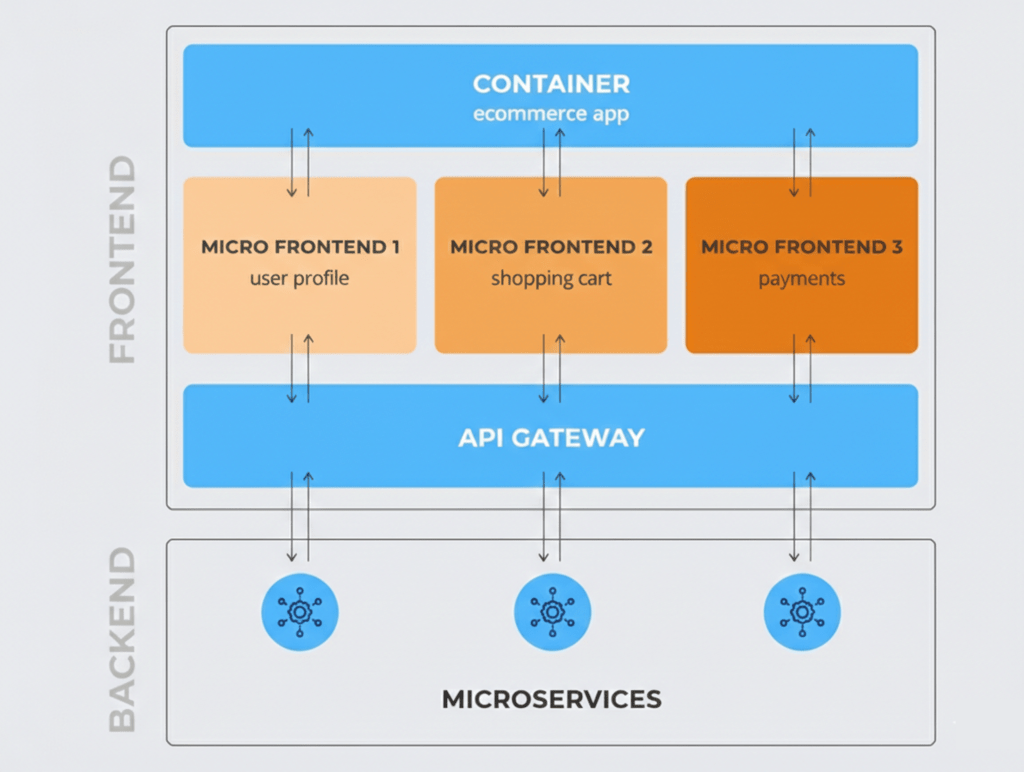
The Alternative: Micro-Apps and Micro-Frontends
1. What are micro-apps?
A micro-app is a self-contained software module that encapsulates a specific business capability.
Unlike monolithic modules, micro-apps are designed to be independently deployable, upgradable, and scalable.
Each micro-app has its own:
- Data layer (can be isolated or share standardized APIs)
- Business logic (rules, validations, workflows)
- Lifecycle (development, deployment, and maintenance independent of other apps)
By breaking an enterprise platform into micro-apps, organizations gain agility, reduce risk, and optimize resource allocation.
2. Why Micro-Apps + Micro-Frontends work together
The combination of micro-apps and micro-frontends creates a fully composable enterprise platform:
- Micro-apps handle business logic, workflows, and data
- Micro-frontends handle UI presentation, role-based experiences, and integration
This architecture provides true modularity: every new capability is like adding a new Lego block, without touching the foundation.

How Elix Implements Micro-App Architecture
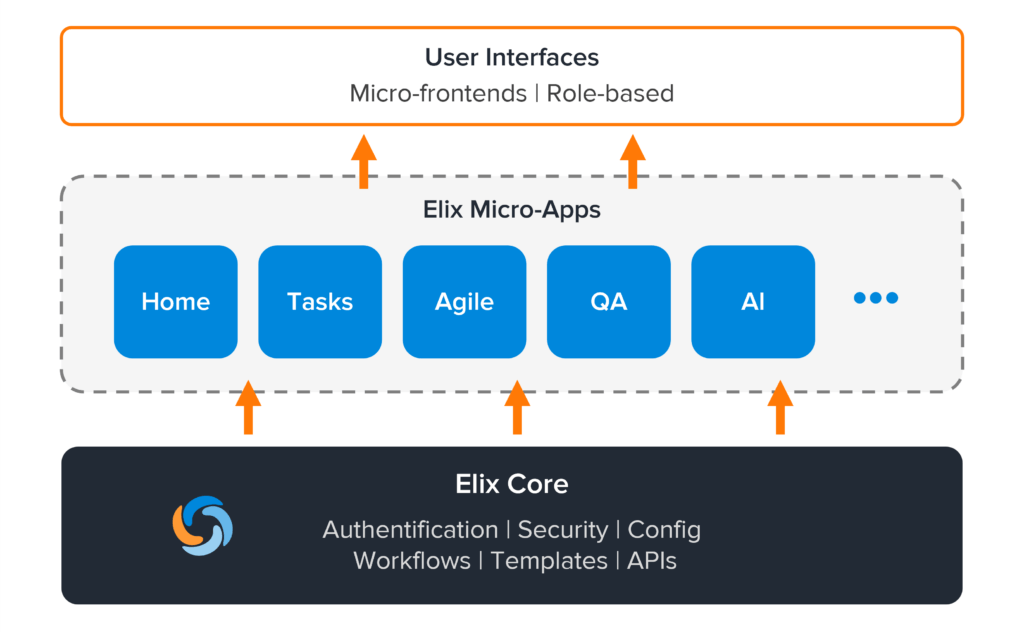
At the heart of Elix is a modular architecture designed for flexibility, scalability, and independence, moving beyond the rigid limits of monolithic design.
1. The Foundation: Elix Core
The Elix Core serves as the unified backbone of the platform, providing the essential infrastructure that all modules rely on.
- Central Governance: Handles authentication, security, and global configuration.
- Operational Backbone: Manages workflows, templates, and standardized API interfaces.
- System Integrity: Ensures compliance and operational consistency while allowing higher layers to remain decoupled.
2. The Engine: Elix Micro-Apps
The Micro-App layer is where functional independence happens. Unlike a monolith, where domains are tightly coupled, Elix treats each business function as a self-contained unit.
- Domain Encapsulation: Each app (e.g., Home, Tasks, Agile, QA, AI) contains its own logic and evolution path.
- Independent Lifecycle: Apps can be activated, updated, or scaled independently without creating global side effects.
- Elastic Scaling: High-demand apps like AI or Analytics can scale their resources without forcing the entire system to over-provision.
3. The Interface (Micro-Frontends)
The Interface layer ensures that the modularity of the backend is reflected in the user experience.
- Role-Based Access: Interfaces are tailored to specific user roles, showing only relevant modules.
- Micro-Frontends: UI components are decoupled, communicating with the Core and Micro-Apps through secure, standardized APIs.
- Consistency: Delivers a seamless, customizable experience while maintaining the structural benefits of independent deployment.

Benefits for CIOs & CTOs
With Elix’s micro-app architecture, the IT platform becomes a strategic enabler rather than a constraint, allowing CIOs and CTOs to align technology investments with business priorities, drive digital transformation, and maintain agility in dynamic markets.
✅ Faster Innovation
- Deploy new capabilities independently without waiting for full-platform upgrades
- Incremental releases reduce time-to-market and improve competitiveness
✅ Reduced operational risk
- Isolated micro-apps contain failures without affecting the rest of the platform
- Safe, rollback-capable upgrades protect business continuity
✅ Predictable & efficient scaling
- High-demand modules scale independently, optimizing resource allocation
- Lower infrastructure and licensing costs due to modular scaling
✅ Customization without compromise
- Business teams can configure workflows, dashboards, and KPIs per domain
- Minimal interference with other domains reduces technical debt
Conclusion
Modern enterprise platforms must do more than just deliver features, they must evolve with the business, safely, predictably, and efficiently.
Elix embodies this vision:
- Elix Core ensures governance, security, and data integrity
- Micro-apps encapsulate independent business capabilities
- Micro-frontends deliver role-based, modular user experiences
Together, this architecture enables CIOs and CTOs to accelerate innovation, reduce risk, and optimize costs, all while preparing the organization for future growth.
Content
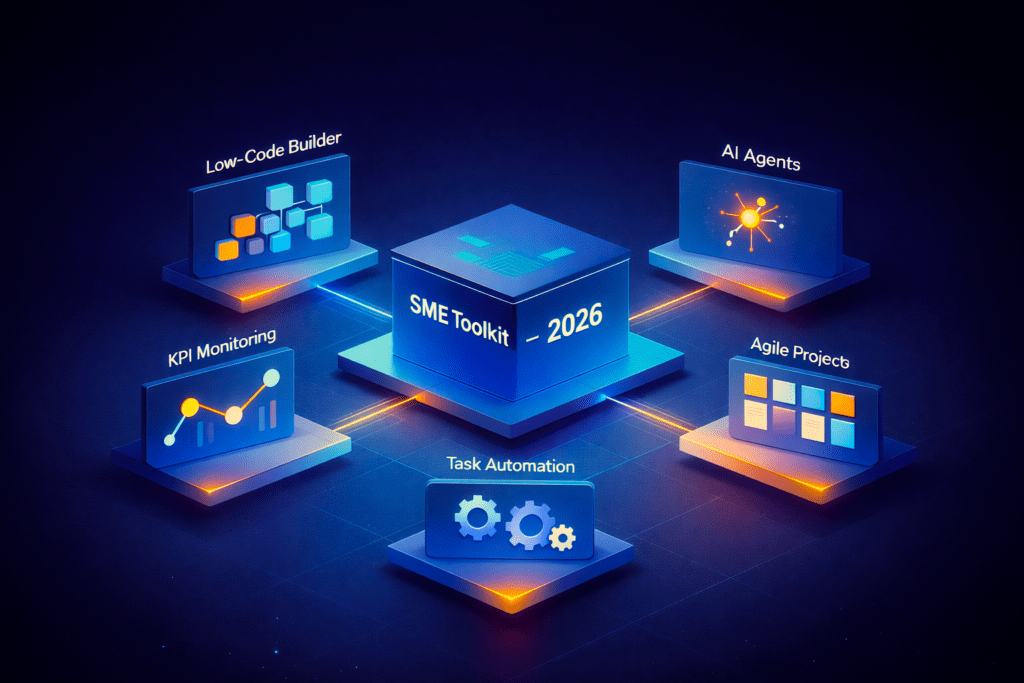
By 2026, small and medium-sized enterprises (SMEs) will face a tougher, faster, and more complex business environment than ever before. To stay competitive, SMEs must move away from fragmented tools and rigid software toward flexible, intelligent, and modular platforms. Here are the 5 must-have features that will define the modern SME toolkit in 2026.
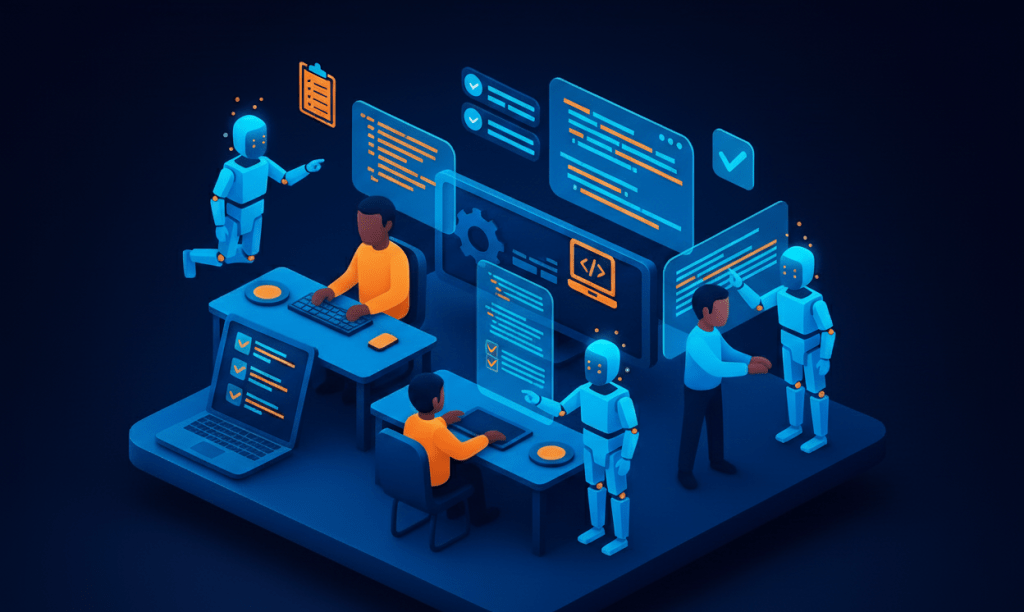
The software development landscape is changing fast, and the latest catalyst is AI agents. While we've gotten used to AI-powered assistants that help with small, specific tasks, AI agents are different. Think of them as more than just a tool; they're like digital teammates that can work autonomously to achieve a goal.
What if digitizing your business processes no longer required a team of developers? Thanks to low-code platforms like Elix, that vision is now a reality. This quiet yet powerful revolution is transforming how organizations approach software development, making it faster, more accessible, and cost-effective.