Test Smarter : How to Structure Your QA Process with Elix
Blog
·
28/11/2025
·


 · Copy Link
 As organizations shift toward Agile and DevOps delivery models, the pace of development accelerates dramatically. Teams are now expected to release features faster, respond to customer feedback quicker, and maintain consistently high product quality.
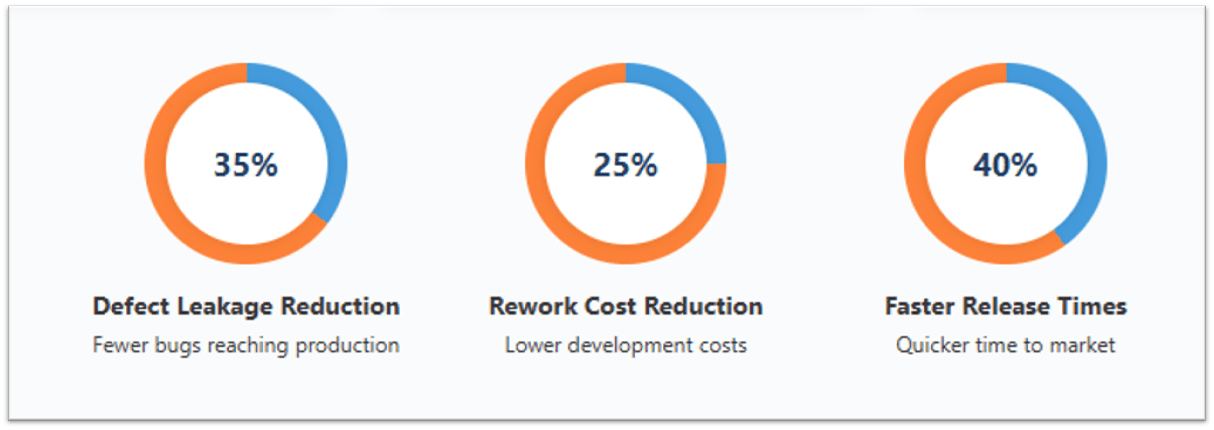
Modern software teams that embrace structured QA see tangible results. Studies across the industry show that early testing and continuous validation can reduce defect leakage by up to 35%, and cut rework costs by nearly 25%. Teams that integrate QA throughout the development cycle also report up to 40% faster release times, driven by fewer late-stage surprises and better alignment across stakeholders.
Yet achieving this level of efficiency requires the right tools and processes.
This is where Elix comes in. Its QA module helps teams structure, track, and automate their QA activities while ensuring full traceability from requirements to release. Whether you’re building new features, refining existing ones, or preparing for deployment, Elix QA provides the visibility and structure needed to “test smarter,” not harder.
The New Face of QA in Agile & DevOps: A Collaborative, Continuous Discipline
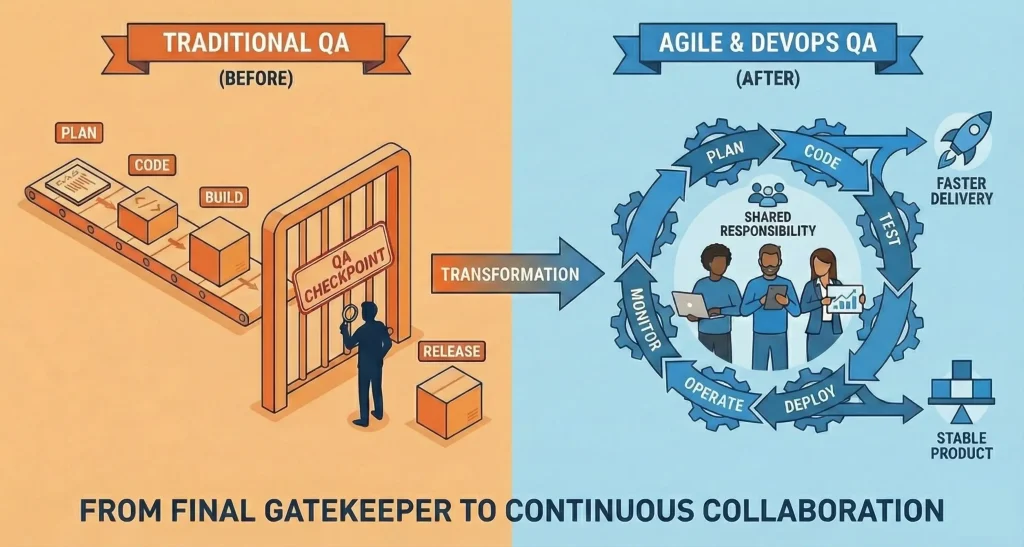
Quality Assurance has undergone a fundamental transformation. In the era of Agile and DevOps, QA is no longer a final checkpoint at the end of the development cycle. It has evolved into a continuous, collaborative discipline shared by developers, testers, and product teams. This shift is not just cultural, it directly impacts delivery performance and product stability.
1. From Gatekeepers to Continuous Quality Partners
Traditional QA operated as a separate phase, test after build, validate after development. But Agile and DevOps practices disrupted this model. With sprint cycles shortening and release frequencies increasing, QA teams had to adapt.
Industry benchmarks show that teams practicing continuous testing detect defects up to 45% earlier, reducing overall defect density and minimizing last-minute release blockers. QA has become a proactive partner in identifying risk, shaping acceptance criteria, and guiding teams toward higher-quality outcomes from day one.
2. Collaboration as the Core of Effective QA
As quality becomes a shared responsibility, the collaboration between developers, testers, and product teams becomes essential. Compartmentalized QA slows down delivery and introduces blind spots. High-performing Agile teams instead adopt a shared-ownership mindset.
Developers + QA :
- Developers write unit and integration tests
- QA focuses on edge cases, exploratory testing, usability, and business flows
- Teams that encourage joint test planning have seen up to 35% fewer reopened defects
Product + QA
- Product teams provide clear acceptance criteria and user journeys
- QA translates business expectations into concrete test scenarios
- This alignment reduces requirement gaps by 20–30% across sprints
Cross-team visibility and shared feedback loops allow issues to be resolved sooner. When feedback loops operate daily instead of weekly, teams experience:
✅ 34% faster issue resolution
✅ Higher sprint predictability
✅ Better release confidence across stakeholders
3. The Outcome: Quality at the Speed of Delivery
By combining evolving QA practices with strong cross-team collaboration, organizations achieve not only better-quality software but also a smoother and more predictable delivery flow. QA becomes an enabler of speed, not an obstacle, when it is integrated, continuous, and collective.
This foundation sets the stage for the next section, where we explore how Elix operationalizes these modern QA practices, bringing structure, traceability, and collaboration into one unified platform.
How Elix QA Ensures Quality, Traceability & a Smarter Testing Process
Delivering high-quality software at Agile and DevOps speed requires more than good documentation, it requires an ecosystem where requirements, test cases, test runs, and environments are all connected.
Elix provides exactly that: a unified QA workspace that brings structure, automation, and transparency to every phase of the testing cycle.
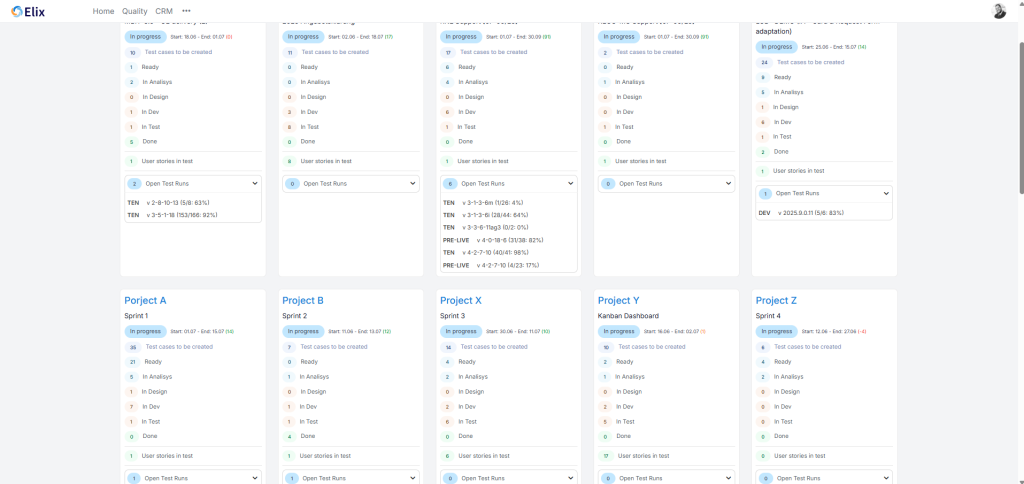
1. A Real-Time QA Dashboard for Complete Sprint Visibility
Elix begins with a comprehensive QA dashboard designed to give Test Managers instant clarity on sprint progress, which displays:
- All current sprints with start and end dates
- User stories by state (backlog, in development, in testing, done…)
- Whether each user story has an associated test case
- Open test runs and their execution status
2. A Dual-Screen Sprint View for End-to-End Traceability
Elix’s sprint view is designed for testers, test managers, and release managers to stay aligned (see screenshot and explanation below) :
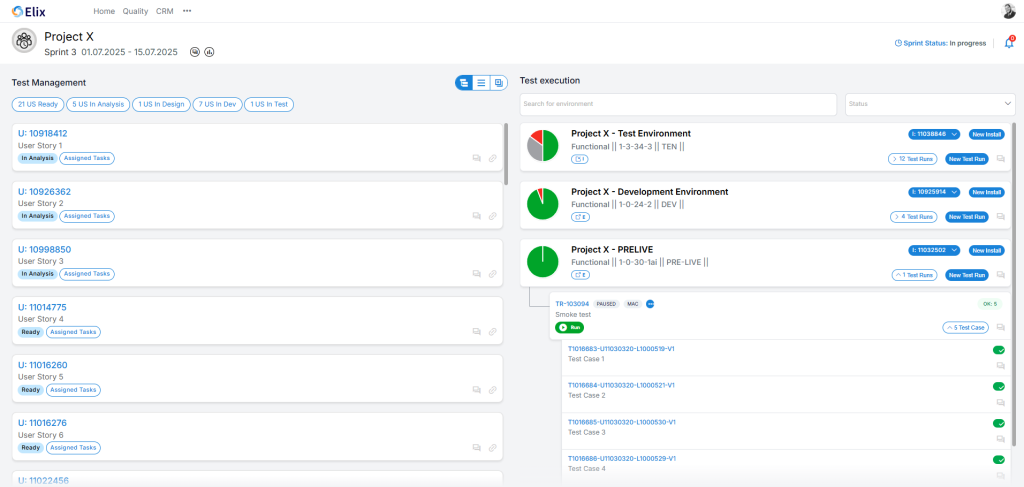
Category | Left Panel : User Stories & Test Artifacts | Right Panel : Environments & Test Runs |
Description | Shows functional scope and test coverage for the sprint. | Displays test execution status and environment health. |
Key Elements | – All sprint user stories – Linked test cases with pass/fail status – Assigned development tasks | – Project environments (dev, test, staging, prod…) – Active test runs per environment – Pie-chart visualization of results |
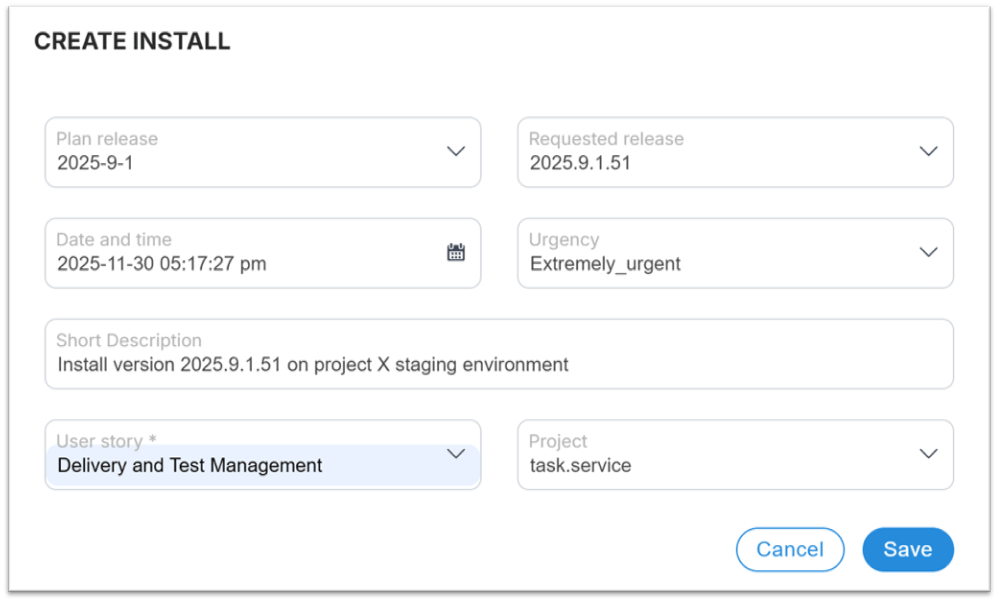
3. Version Assignment for CI/CD-Driven Testing
To support DevOps automation, Elix allows teams to assign a new version to an environment and automatically initiate testing as part of the CI/CD pipeline.
This reduces manual coordination and enables :
✅ Faster deployment validation
✅ Automated smoke tests for every version
✅ More predictable release quality
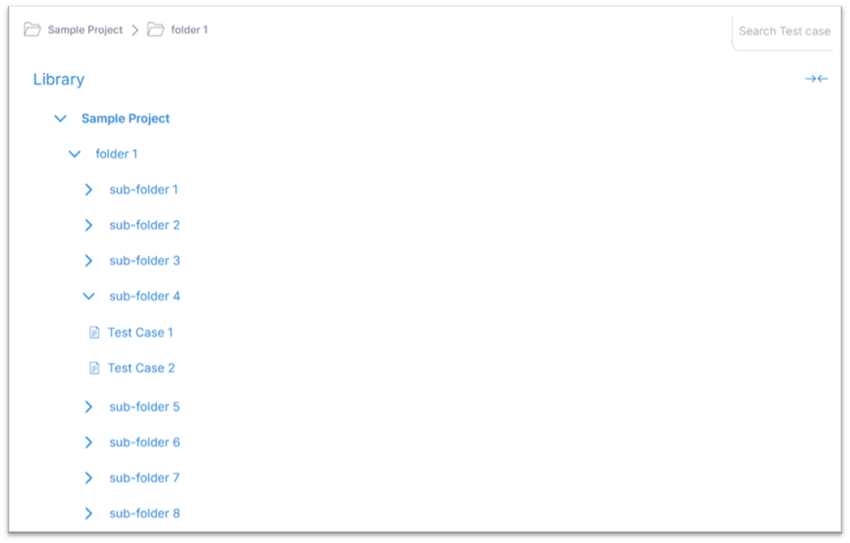
4. A Structured Test Case Library
Elix organizes test cases into a clean, tree-structured library, grouped by folders according to feature, module, or product area. This makes retrieval easier and prevents duplication : a problem that affects nearly 30% of QA teams in growing organizations.
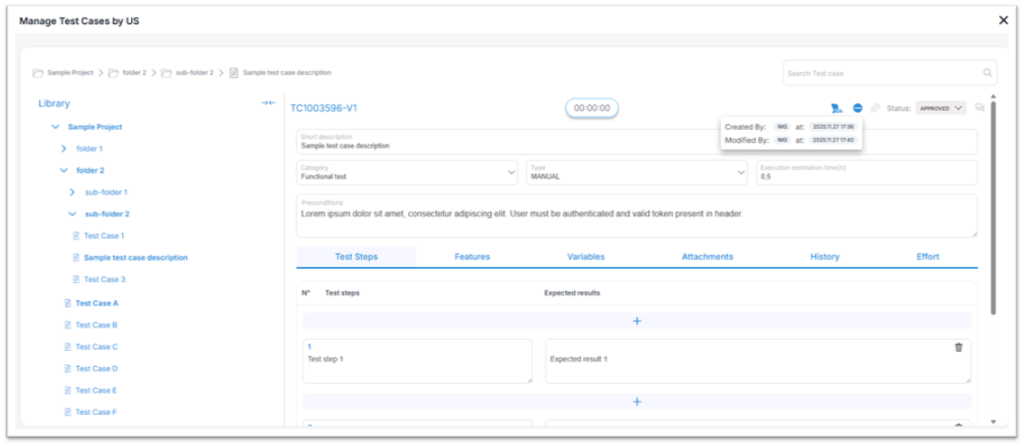
5. Detailed Test Case Screen for Intuitive Generation
Each test case contains everything a tester needs :
- Short description
- Category (functional, non-functional, UI, unit, DB…)
- Type (manual or automated)
- Estimated execution time
- Preconditions
- Step-by-step actions with expected results
- Attachments (screenshots, files)
- Change history
- Automatic time logging to timesheets
✅ Clear and standardized test cases have been shown to reduce tester ambiguity by up to 35% and improve onboarding for new QA members.
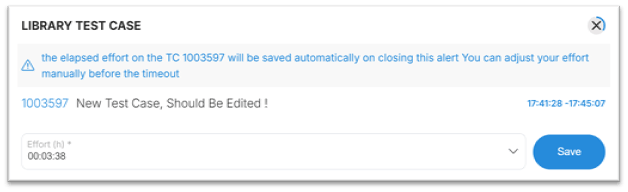
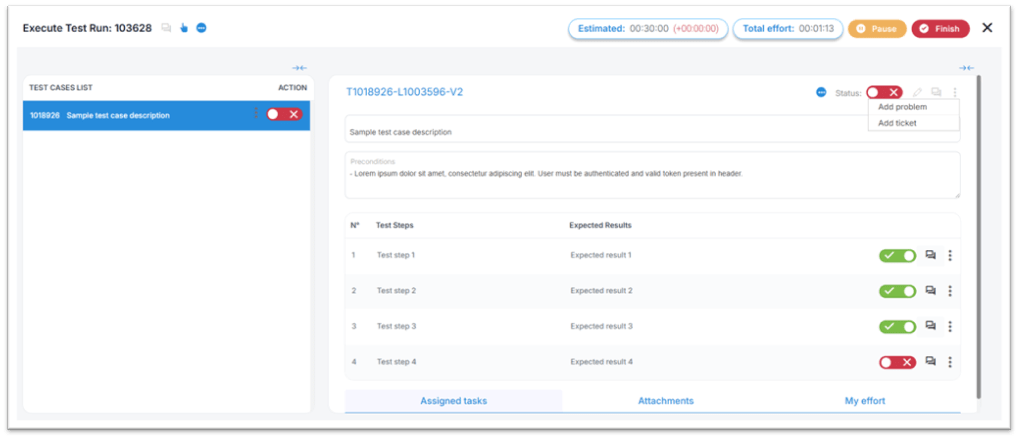
6. Execute Test Run: Structured, Measurable, and Action-Oriented
During execution, testers interact with a dedicated test run screen where they can:
- Mark each step as passed or failed
- Attach bugs or tickets directly to the impacted test case
- Add screenshots or notes
- Move sequentially through test cases
- Automatically track effort using an integrated timer
These features significantly reduce duplicate reporting, and time-tracking improves planning accuracy.
QA teams see 10–15% better sprint effort estimation after adopting structured run tracking.
7. Change Request Approval Workflow for Quality Governance
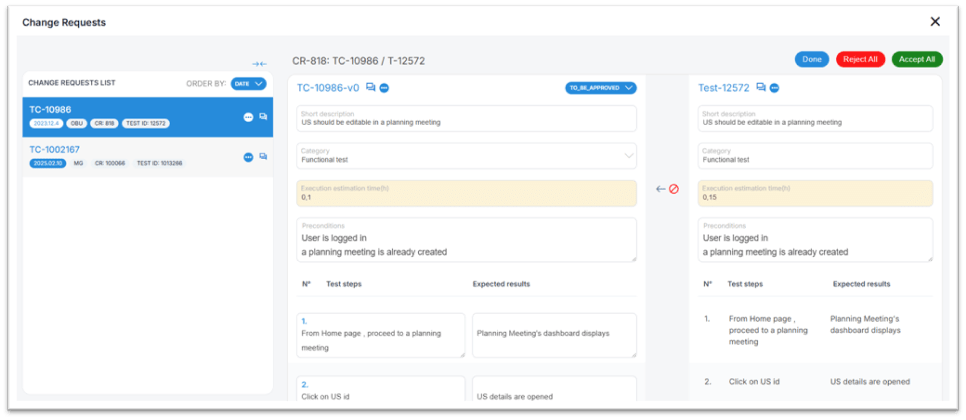
When test cases are updated, Elix enforces a governance flow:
- Modified test cases appear in the “to be approved” queue
- The test manager sees which fields were changed
- He can accept or reject changes directly from one dashboard
✅ Teams using controlled approval workflows typically reduce test case inconsistency by 25–30%, especially in large projects with frequent updates.
8. AI Agents: Scaling QA Through Intelligent Automation
Elix enhances traditional QA with a suite of AI-driven assistants that streamline the most time-consuming testing tasks.
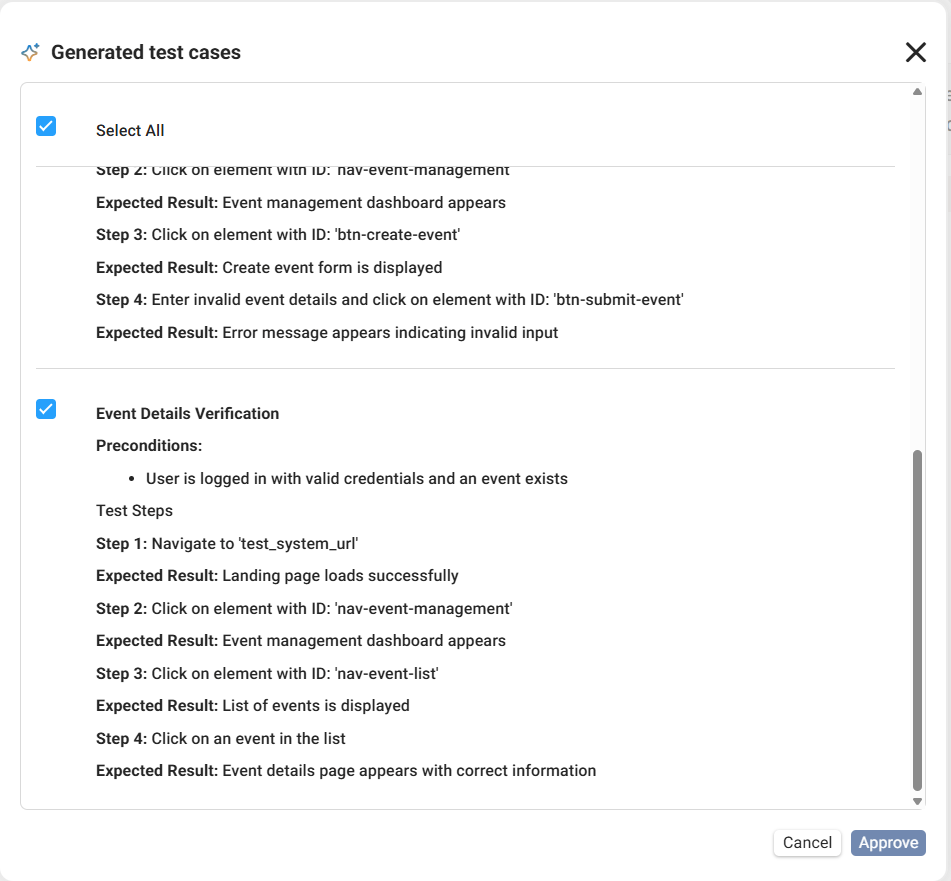
➡️ AI Test Case Generator
Generates complete test cases from user story descriptions and acceptance criteria.
Teams using automated test generation often cut test design time by 40–60%.
➡️ AI Test Script Generator
Transforms test cases into executable test scripts for automated suites, reducing scripting effort and aligns manual and automated coverage.
➡️ AI Automated Test Runner
Triggers automated test runs via Jenkins and attaches detailed reports to Elix. Automated execution reduces validation cycles by up to 50%, accelerating feedback loops.
➡️ AI A/B Test Agent
Captures all versions of project screens, compares them, detects UI or content changes, and generates a PDF report. Perfect for regression on UI-heavy applications.
Click here for more details about Elix’s AI-Powered A/B Testing
9. A Unified Platform That Connects Every QA Element
By combining dashboards, structured libraries, intelligent AI automation, and approval workflows, Elix delivers :
✅ Full traceability from user story → test case → test run → defect
✅ Stronger alignment across teams
✅ Higher repeatability and fewer coverage gaps
✅ A measurable improvement in release readiness
Teams adopting Elix-style structured QA generally achieve over 30% higher test coverage consistency and significantly more predictable releases.
Let's Transform QA into a Strategic Accelerator
In conclusion, QA has shifted from a late-stage activity to a continuous, collaborative discipline shared across developers, testers, and product owners. Teams that adopt this approach consistently achieve faster feedback loops and stronger release confidence.
Elix reinforces this modern QA model with a unified platform that connects requirements, test cases, executions, environments, and AI-driven automation. Its real-time dashboards, structured test libraries, governed change workflows, and automated test runs give teams the visibility and traceability needed to maintain quality at high delivery speed. The result is more predictable releases, clearer communication, and measurable improvements in both productivity and product stability.
As IT companies race to deliver features faster, Elix helps transform QA from a perceived bottleneck into a strategic accelerator. By combining the right structure with intelligent tooling, teams can achieve the balance every modern software organization seeks: speed with confidence, and agility with quality.
Content
 Elix News
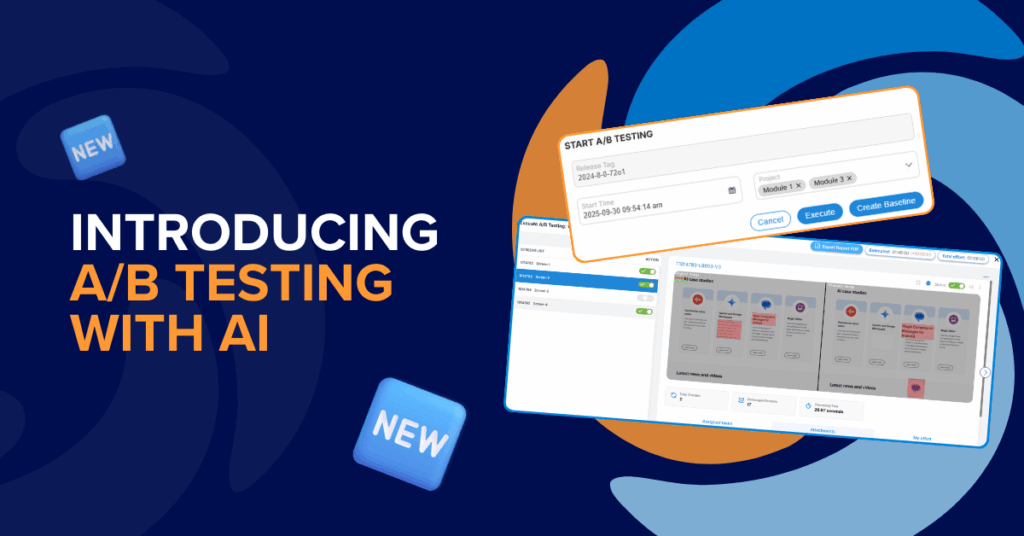
Elix is launching a major innovation : AI-Powered A/B Testing for Visual Regression Analysis. This new feature empowers teams to validate UI changes with unprecedented accuracy, automation, and clarity, helping ensure every release is visually stable and user-ready.
 Insights
Manual testing catches software defects, but it’s slow, costly, and can’t keep up with fast releases. In this article, we discuss how to automate software testing effectively, how to integrate AI in testing, and how testing tools, like Elix, streamline QA processes with smart automation and AI-assisted test script/case generation.
 Insights
In a fast-paced digital landscape, African tech SMEs face a difficult equation: deliver faster, with fewer resources, without compromising on quality. That’s where software testing becomes a strategic asset. It not only helps prevent critical bugs, but also accelerates delivery, reduces long-term costs, and ensures a seamless customer experience.
Discover how Elix can transform your QA journey